Inside a real intervention.
Not abstract strategy. Specific operational friction, mapped clearly and replaced with working systems.
Manual document intake was eating half the week.
A small professional services team was manually reviewing incoming documents from email, uploads, and shared folders, then deciding what each file was, where it belonged, and who should handle it.
We designed a lightweight AI intake layer that classifies documents, extracts key fields, and routes them automatically inside the tools the team already uses.
Manual sorting dropped dramatically, routing happened in seconds, and the team got back hours each week for actual client work.
The point is not to replace people. It is to remove repetitive load so humans can focus on judgment, relationships, and higher-value work.
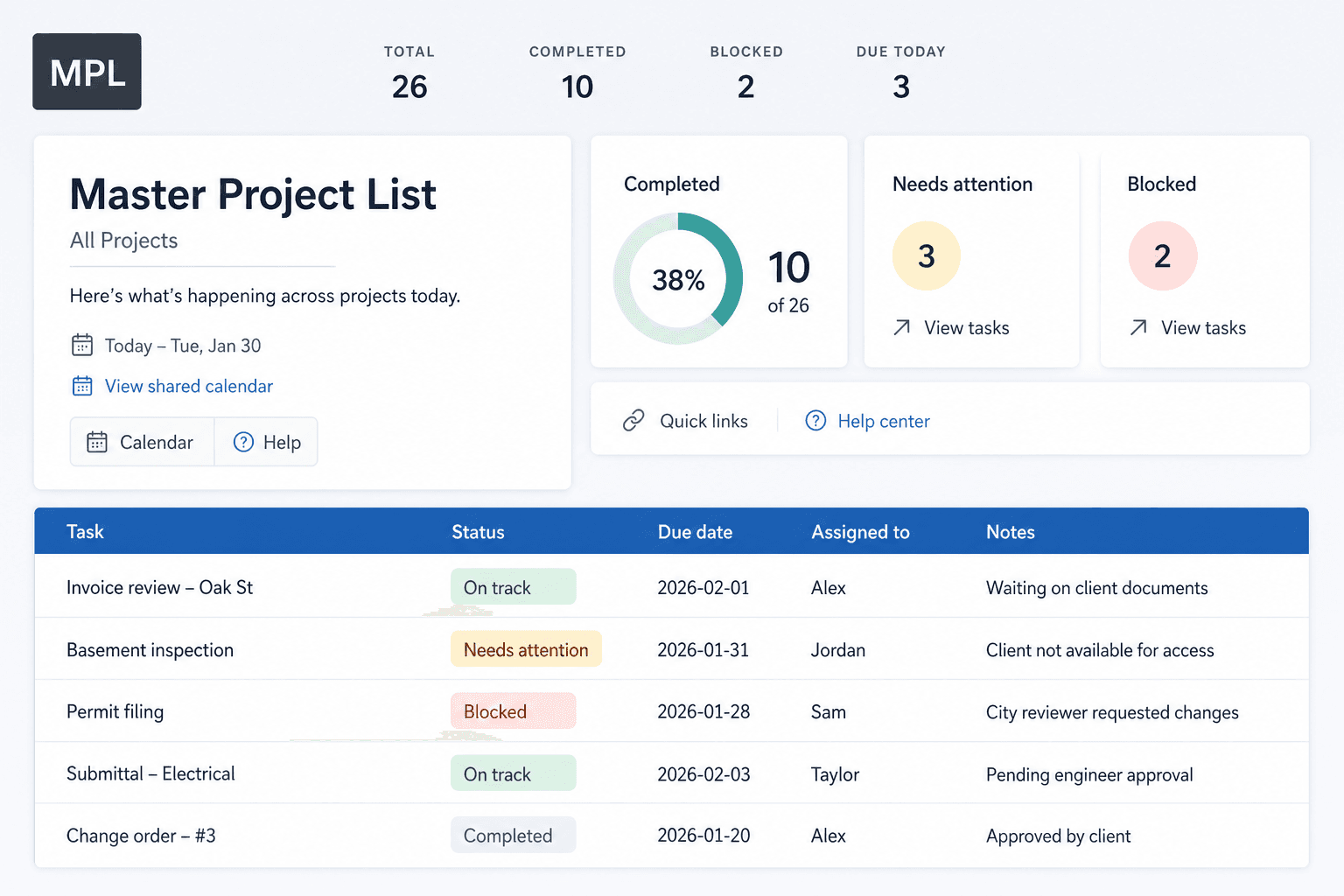
Weekly reporting stopped consuming valuable leadership time.
A leadership team was spending hours every week pulling numbers from multiple sources, cleaning them by hand, and assembling updates that were already outdated by the time they were shared.
We automated collection, normalization, and summary generation so the reporting cycle ran from a single workflow instead of a chain of manual copy-paste tasks.
Reporting went from a recurring drain to a reliable system, giving leaders faster visibility and cleaner decision support with minimal effort.
The point is not to replace people. It is to remove repetitive load so humans can focus on judgment, relationships, and higher-value work.
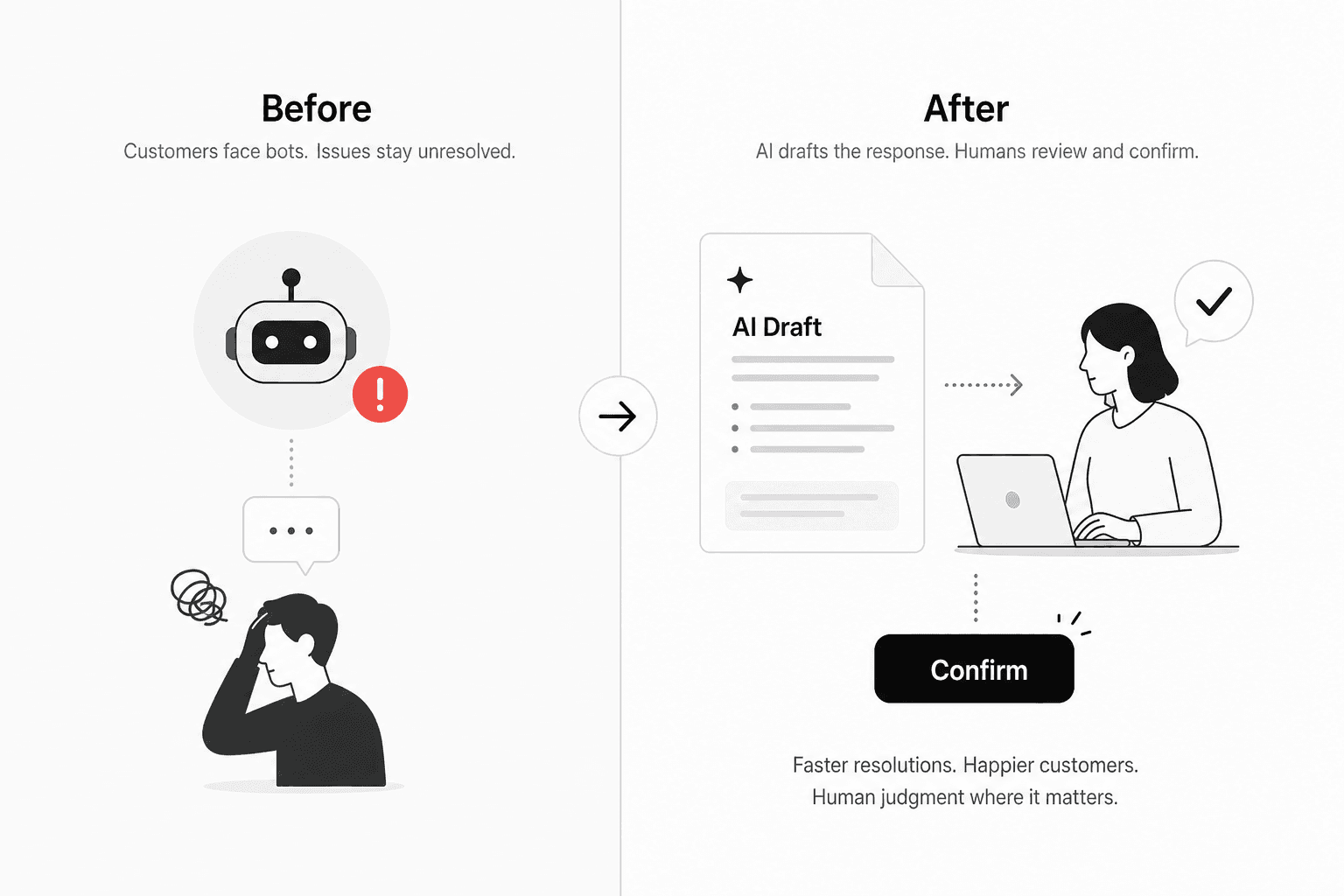
Routine customer triage stopped bottlenecking the front door.
A local business was relying on people to read incoming inquiries, decide what mattered, and forward messages to the right person. Response quality varied, and high-value requests were too easy to miss.
We introduced an AI-first triage layer to categorize inquiries, flag priority messages, draft first-pass responses, and route each request to the right destination.
Response times improved, the handoff process became consistent, and staff spent less time sorting messages and more time closing real opportunities.
The point is not to replace people. It is to remove repetitive load so humans can focus on judgment, relationships, and higher-value work.
Find the first workflow worth fixing.
Start with a diagnostic sprint and leave with a ranked roadmap of what to automate, what to ignore, and what will actually move the business.